
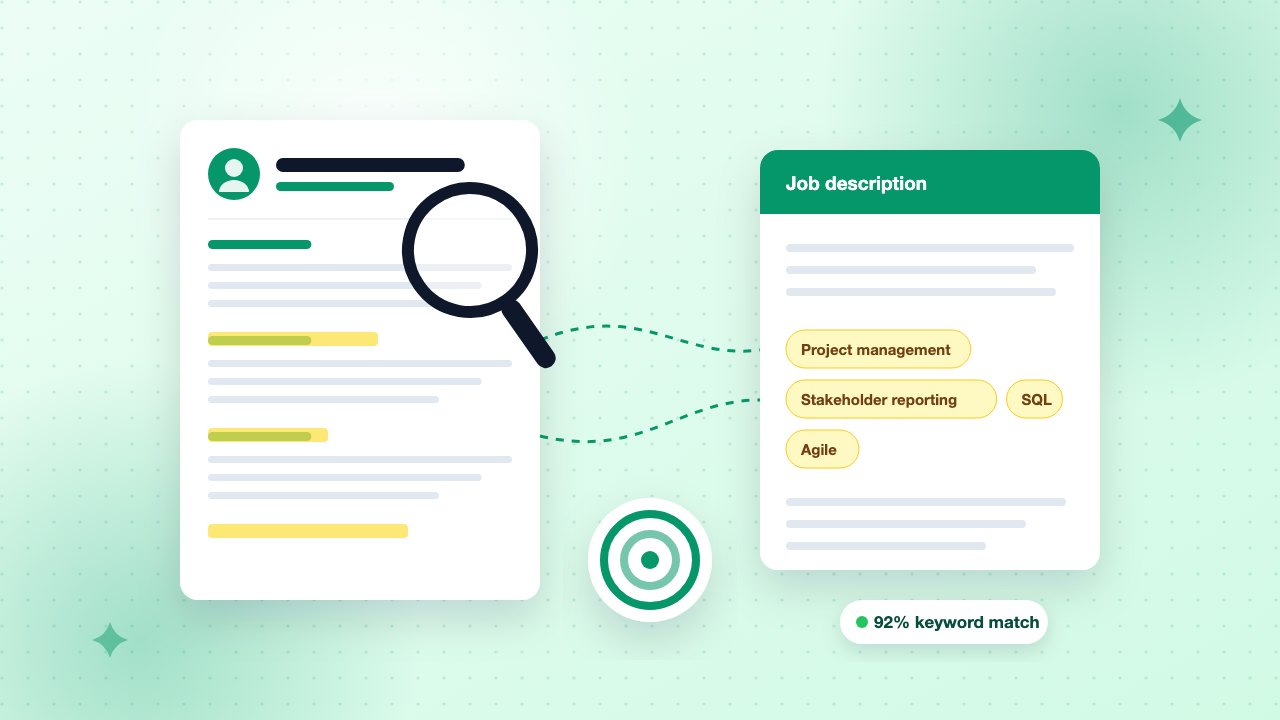
Sending the same resume to 50 jobs feels productive, but it rarely works. Hiring teams, and the applicant tracking systems (ATS) many of them use, are looking for a clear match between your resume and their job description. The good news: tailoring doesn’t mean starting over. With a solid base resume, it takes about 20 minutes.
Step 1: Break down the job description
Copy the posting into a document and highlight:
- Hard skills and tools, e.g. SQL, Salesforce, Figma, financial modelling
- Responsibilities, e.g. “own the quarterly roadmap,” “manage vendor relationships”
- Soft skills that are stressed more than once
- The exact job title and seniority words (lead, senior, associate)
Anything mentioned in the first few bullets or repeated more than once is probably a priority.
Step 2: Match your headline and summary
Your summary is the first thing a recruiter reads. Rewrite it for each role using the title and top two or three requirements:
Generic: Experienced professional seeking new opportunities.
Tailored: Project manager with 6 years of experience leading Agile software teams, delivering 20+ releases on schedule, and reporting to executive stakeholders.
Step 3: Reorder and rewrite your bullets
You don’t need new experience, just better emphasis:
- Move the bullets most relevant to this job to the top of each role.
- Use the employer’s terms where they honestly describe your work. If they say “stakeholder reporting” and you wrote “sent updates to managers,” use their phrase.
- Cut or shorten bullets that don’t support this application.
- Add numbers wherever you can: budget, team size, percentage gains, time saved.
Step 4: Align your skills section
List the tools and skills from the posting that you really have, spelled the same way they are (for example “Google Analytics 4,” not “GA”). Put the most relevant skills first.
Don’t keyword-stuff. Hidden text, white-font keywords, or long lists of skills you don’t have can get you filtered out, or caught in the interview. Use keywords naturally, in real sentences about real work.
Step 5: Tailor your cover letter in three places
- Opening: name the exact role and one specific reason you want to work at this company.
- Middle: connect two of your achievements to their top two requirements.
- Close: show enthusiasm for a specific project, product, or goal they mentioned.
Need a structure? Read our guide on how to write a cover letter recruiters actually read.
Step 6: Run a final ATS check
- Use standard section headings: Experience, Education, Skills.
- Keep contact details in the main body, not in a header or image.
- Export a text-based PDF, not a scanned image.
- Check your ATS score in the builder and fix anything it flags.
Save time with versions
Keep one master resume with everything, then save a tailored copy per job family (for example “Product Manager” and “Project Manager”). Each new application then only needs small edits. Learn more about building an ATS-friendly resume.